THE INDIAN CINEMA GUIDE

Hindi CINEMA · 2010
Vakratunda Swaha
Audience rating
Source: TMDB2 votes
Overview
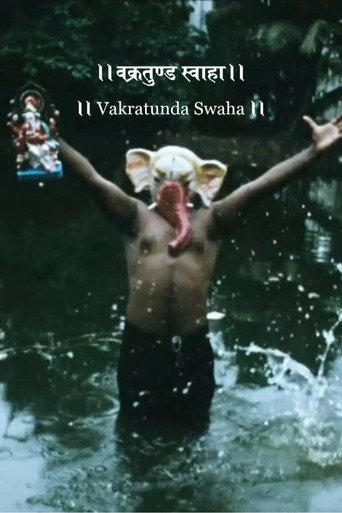
In 1997, Ashish Avikunthak filmed a sequence -- a friend and artist, Girish Dahiwale, immersing an idol of Ganesha at Chowpati beach, Bombay on the last day of the Ganapati festival. A year later, he committed suicide. After twelve years, Avikunthak completed the film. Using his footage as the leitmotif, this film is a requiem to a dead friend, and metamorphosises into an “existential inquiry into the idea of death”.
A closer look
Vakratunda Swaha (2010) is a Hindi-language Indian movie. Directed by Ashish Avikunthak. The cast includes Girish Dahiwale, Debu Pramanik, Ashish Avikunthak, Swapan Pramanik. Runtime: 21 minutes.
Cast & crew



Beyond Vakratunda Swaha
Explore other films featuring the people behind this movie.
Vakratunda Swaha FAQs
Answers from the movie information available in our catalogue.
What is the original language of Vakratunda Swaha?
Vakratunda Swaha is listed as a Hindi-language movie in our catalogue. Dubbed versions are not tracked here.
What release date is listed for Vakratunda Swaha?
Our source metadata lists 1 January 2010. Release dates can vary by country and may change; this does not confirm current cinema screenings.
Who directed Vakratunda Swaha?
The listed director is Ashish Avikunthak.
Who is in the cast of Vakratunda Swaha?
The available cast credits include Girish Dahiwale, Debu Pramanik, Ashish Avikunthak, Swapan Pramanik, Radhika Apte. See Cast & crew above for the available character names and profile links.
How long is Vakratunda Swaha?
The recorded runtime is 21 minutes. Different cuts or releases may have a different duration.
What is Vakratunda Swaha about?
In 1997, Ashish Avikunthak filmed a sequence -- a friend and artist, Girish Dahiwale, immersing an idol of Ganesha at Chowpati beach, Bombay on the last day of the Ganapati festival. A year later, he committed suicide. After twelve years, Avikunthak completed the film. Using his footage as the leitmotif, this film is a requiem to a dead friend, and metamorphosises into an “existential inquiry into the idea of death”.