THE INDIAN CINEMA GUIDE

Marathi CINEMA · 2011
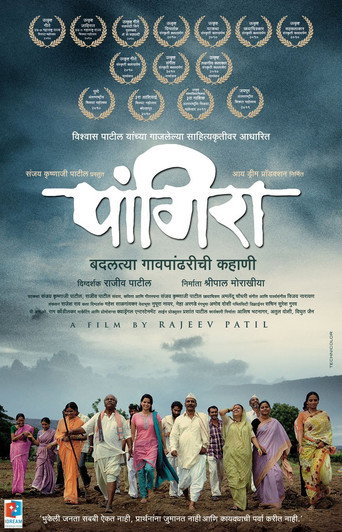
Pangira
Overview
The story of ‘Pangira’ is all about how rapidly Indian villages have changed, over a period of time. Old rural hospitality and contented, peaceful village life – is now a History! Right from natural resources to local politics – ‘Indian village’ has changed and IS still changing from every aspect. Miss-use …of drinking and farming water, un-imaginable destruction of natural resources by cutting down trees in and around villages is normal. Development is happening, but with ‘Jilha Parishads’ and ‘Panchayat Samitees’, politics and courruption has become integral part of the system. At the end, a farmer, a common man, still does not get the price he deserves for his hard work.
A closer look
Pangira (2011) is a Marathi-language Indian movie. Genres: Action, Thriller. Directed by Rajeev Patil. The cast includes Meeta Sawarkar, Pramod Pawar, Kishore Kadam, Santosh Juvekar. Runtime: 120 minutes.
Cast & crew




Beyond Pangira
Explore other films featuring the people behind this movie.
Pangira FAQs
Answers from the movie information available in our catalogue.
What is the original language of Pangira?
Pangira is listed as a Marathi-language movie in our catalogue. Dubbed versions are not tracked here.
What release date is listed for Pangira?
Our source metadata lists 20 May 2011. Release dates can vary by country and may change; this does not confirm current cinema screenings.
Who directed Pangira?
The listed director is Rajeev Patil.
Who is in the cast of Pangira?
The available cast credits include Meeta Sawarkar, Pramod Pawar, Kishore Kadam, Santosh Juvekar, Shashank Shende. See Cast & crew above for the available character names and profile links.
How long is Pangira?
The recorded runtime is 120 minutes. Different cuts or releases may have a different duration.
What type of movie is Pangira?
The source lists these genres: Action, Thriller.
What is Pangira about?
The story of ‘Pangira’ is all about how rapidly Indian villages have changed, over a period of time. Old rural hospitality and contented, peaceful village life – is now a History! Right from natural resources to local politics – ‘Indian village’ has changed and IS still changing from every aspect. Miss-use …of drinking and farming water, un-imaginable destruction of natural resources by cutting down trees in and around villages is normal. Development is happening, but with ‘Jilha Parishads’ and ‘Panchayat Samitees’, politics and courruption has become integral part of the system. At the end, a farmer, a common man, still does not get the price he deserves for his hard work.