THE INDIAN CINEMA GUIDE

Hindi CINEMA · 1936
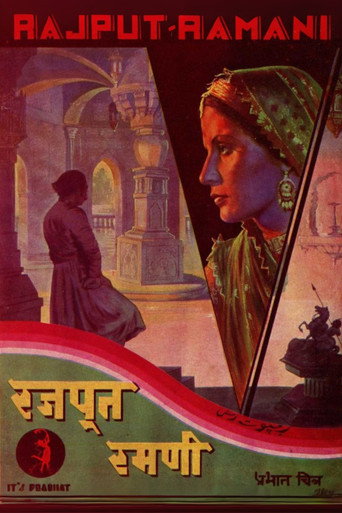
Rajput Ramani
Overview
Set in medieval Rajput court, mainly addresses Rajput notions of chivalry. The legendary warrior Mansingh (Phatak) is the nation's strong man but he is cordially hated even by his own people. Claiming to have been offended by Taramati (Tarkhad), he insists to her eminent father that only a marriage (on terms insulting to her) can placate him. He becomes a tyrant imprisoning large numbers of people, and eventually Taramati's father, also in prison, leads a popular revolt, threatening to kill his son-in-law. Only Taramati's decision to protect her husband resolves the conflict.
A closer look
Rajput Ramani (1936) is a Hindi-language Indian movie. Directed by Keshavrao Dhaiber. The cast includes Nalini Tarkhad, Nanasaheb Phatak, Shanta Apte, Kelkar. Runtime: 138 minutes.
Cast & crew


Beyond Rajput Ramani
Explore other films featuring the people behind this movie.
Rajput Ramani FAQs
Answers from the movie information available in our catalogue.
What is the original language of Rajput Ramani?
Rajput Ramani is listed as a Hindi-language movie in our catalogue. Dubbed versions are not tracked here.
What release date is listed for Rajput Ramani?
Our source metadata lists 16 October 1936. Release dates can vary by country and may change; this does not confirm current cinema screenings.
Who directed Rajput Ramani?
The listed director is Keshavrao Dhaiber.
Who is in the cast of Rajput Ramani?
The available cast credits include Nalini Tarkhad, Nanasaheb Phatak, Shanta Apte, Kelkar, Budasaheb. See Cast & crew above for the available character names and profile links.
How long is Rajput Ramani?
The recorded runtime is 138 minutes. Different cuts or releases may have a different duration.
What is Rajput Ramani about?
Set in medieval Rajput court, mainly addresses Rajput notions of chivalry. The legendary warrior Mansingh (Phatak) is the nation's strong man but he is cordially hated even by his own people. Claiming to have been offended by Taramati (Tarkhad), he insists to her eminent father that only a marriage (on terms insulting to her) can placate him. He becomes a tyrant imprisoning large numbers of people, and eventually Taramati's father, also in prison, leads a popular revolt, threatening to kill his son-in-law. Only Taramati's decision to protect her husband resolves the conflict.