THE INDIAN CINEMA GUIDE

Bengali CINEMA · 2026
Roots
Shikor
Overview
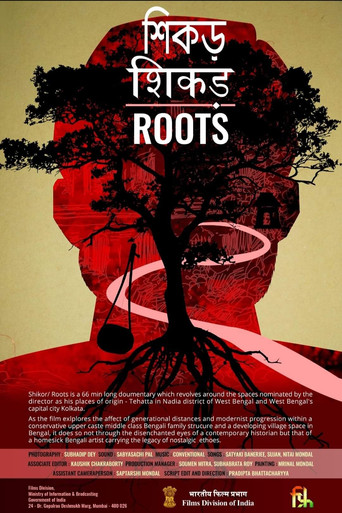
A documentary revolving around the spaces nominated by the Director as his places of origin - Tehatta in Nadia district of Bengal and its capital city, Kolkata. As the film explores the affect of generational distances and modernist progression within a conservative upper caste middle class Bengali family structure and a developing village space in Bengal, it does so not through the disenchanted eyes of a contemporary historian but that of a homesick Bengali artist carrying the legacy of nostalgic ethos.
A closer look
Roots (2026) is a Bengali-language Indian movie. Genres: Documentary. Directed by Pradipta Bhattacharyya. Runtime: 66 minutes.
Cast & crew

Beyond Roots
Explore other films featuring the people behind this movie.
Roots FAQs
Answers from the movie information available in our catalogue.
What is the original language of Roots?
Roots is listed as a Bengali-language movie in our catalogue. Dubbed versions are not tracked here.
What release date is listed for Roots?
Our source metadata lists 3 April 2026. Release dates can vary by country and may change; this does not confirm current cinema screenings.
Who directed Roots?
The listed director is Pradipta Bhattacharyya.
How long is Roots?
The recorded runtime is 66 minutes. Different cuts or releases may have a different duration.
What type of movie is Roots?
The source lists these genres: Documentary.
What is the original title of Roots?
The original title in our source data is Shikor. The English-letter display name may be a romanization.
What is Roots about?
A documentary revolving around the spaces nominated by the Director as his places of origin - Tehatta in Nadia district of Bengal and its capital city, Kolkata. As the film explores the affect of generational distances and modernist progression within a conservative upper caste middle class Bengali family structure and a developing village space in Bengal, it does so not through the disenchanted eyes of a contemporary historian but that of a homesick Bengali artist carrying the legacy of nostalgic ethos.